


Resumen: The virus-to-prokaryote ratio (VPR) has been used in many ecosystems to study the relationship between viruses and their hosts. While high VPR values indicate a high rate of prokaryotes’ cell lysis, low values are interpreted as a decrease in or absence of viral activity. Salar de Huasco is a high-altitude wetland characterized by a rich microbial diversity associated with aquatic sites like springs, ponds, streams and a lagoon with variable physicochemical conditions. Samples from two ponds, Poza Rosada (PR) and Poza Verde (PV), were analyzed by epifluorescence microscopy to determine variability of viral and prokaryotic abundance and to calculate the VPR in a dry season. In addition, to put Salar de Huasco results into perspective, a compilation of research articles on viral and prokaryotic abundance, VPR, and metadata from various Southern hemisphere ecosystems was revised. The ecosystems were grouped into six categories: high-altitude wetlands, Pacific, Atlantic, Indian, and Southern Oceans and Antarctic lakes. Salar de Huasco ponds recorded similar VPR values (an average of 7.4 and 1.7 at PR and PV, respectively), ranging from 3.22 to 15.99 in PR. The VPR variability was associated with VA and chlorophyll a, when considering all data available for this ecosystem. In general, high-altitude wetlands recorded the highest VPR average (53.22 ± 95.09), followed by the Oceans, Southern (21.91 ± 25.72), Atlantic (19.57 ± 15.77) and Indian (13.43 ± 16.12), then Antarctic lakes (11.37 ± 15.82) and the Pacific Ocean (6.34 ± 3.79). Physicochemical variables, i.e., temperature, conductivity nutrients (nitrate, ammonium, and phosphate) and chlorophyll a as a biological variable, were found to drive the VPR in the ecosystems analyzed. Thus, the viral activity in theWetland followed similar trends of previous reports based on larger sets ofmetadata analyses. In total, this study highlights the importance of including viruses as a biological variable to study microbial temporal dynamics in wetlands considering their crucial role in the carbon budgets of these understudied ecosystems in the southern hemisphere.

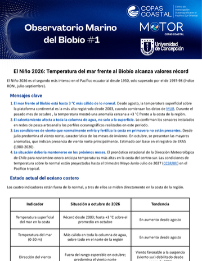
Observatorio Marino del Biobío 1 de COPAS Coastal

Climatology of the sea temperature from long-term in situ observations: Northern Chilean Patagonia Autores COPAS Coastal: Iván Pérez-Santos Pamela Muñoz Linford Autores: Cécile Pujol, Alexander

Evaluating harvest control rules under recruitment regime shifts: Evidence from static and dynamic reference biomass in the anchovy fishery of the southern Humboldt ecosystem Autores

The Major June 2023 Flood Event in Central Chile: Hydrometeorological Characterization and Rain-on-Snow Contribution Autores COPAS Coastal: Deniz Bozkurt Autores: Sebastian A. Krogh , Rene

Floraciones de dinoflagelados tóxicos moduladas por anomalías térmicas extremas en los fiordos de la Patagonia noroccidental Autores COPAS Coastal: Iván Pérez-Santos Autores: Patricio A. Díaz,
Póster de Flavio Solís al XXI COLACMAR

Bubble curtains underperform commercial expectations against ichthyotoxic HABs under field conditions: hydrodynamic and cell motility-dependent constraints in Patagonian salmon aquaculture Autores COPAS Coastal: Pamela Muñoz
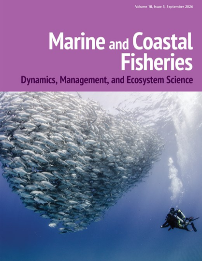
Rebuilding a tropical shrimp fishery: Evidence from spatial closures and stock assessment of pink shrimp Penaeus notialis in the Colombian Caribbean Autores COPAS Coastal: Luis

Patagonian Ice Sheet discharge enhanced by AMOC slowdown through thermal bipolar seesaw Autores COPAS Coastal: Carina Beatriz Lange Autores: Takuto Kasuya, Yuta Kuniyoshi, Kana Nagashima,
Póster Jonathan Viveros
Póster Alondra Sánchez
Póster de Claudia Melo